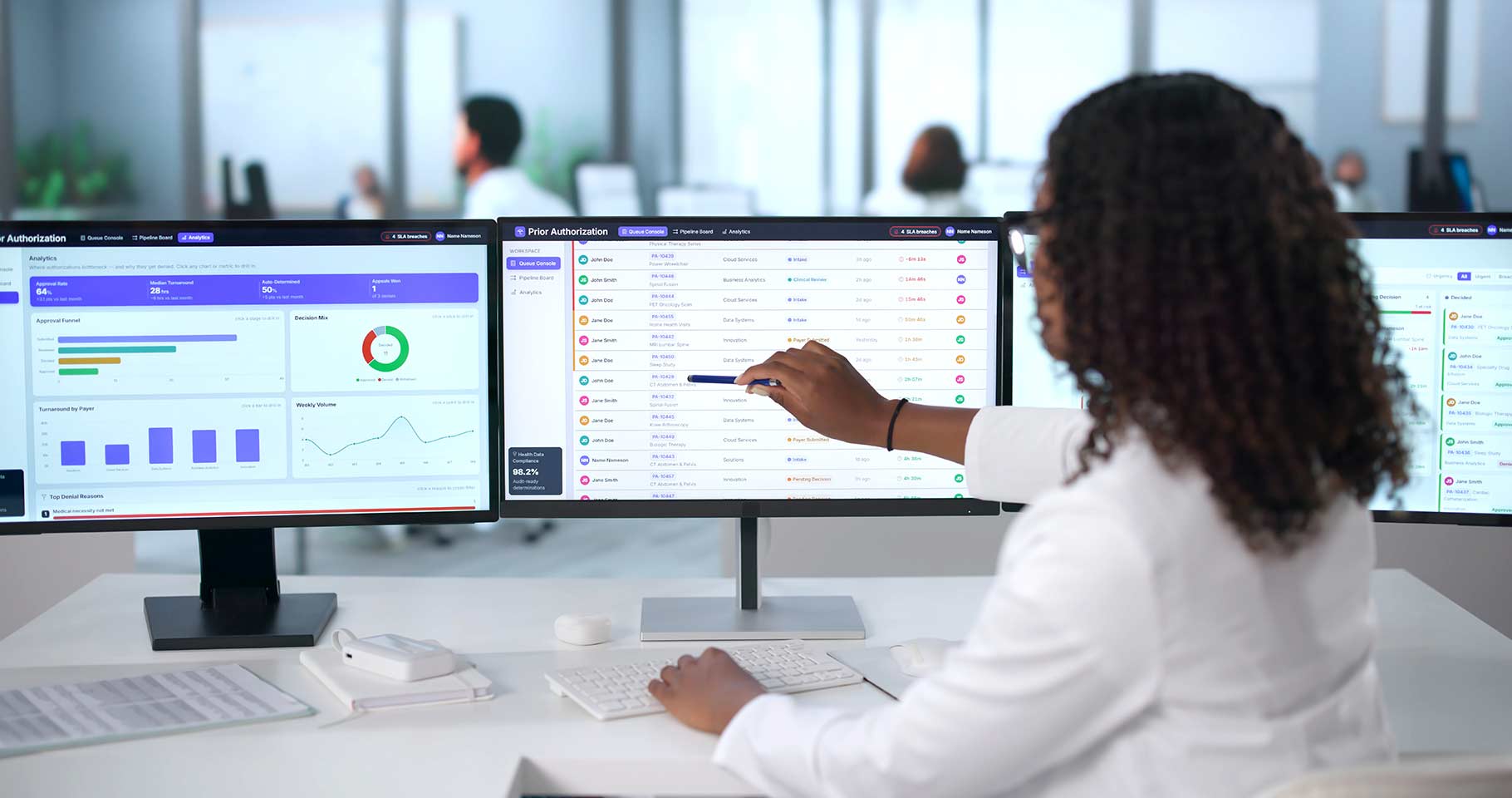
EHR support Dallas independent practices can count on looks very different from what the large hospital systems have. Walk into a large hospital system in Dallas–Fort Worth and you will almost certainly find Epic running the show, backed by a dedicated internal IT team built specifically to support it. Walk into an independent practice in Plano, Frisco, Irving, or Fort Worth, and the picture looks very different — athenahealth, eClinicalWorks, NextGen, Tebra, DrChrono, and AdvancedMD are all in active use across the metroplex, often without anything close to the internal support bench the large systems have.
That gap — between how complex EHR and practice management systems have become and how little dedicated support most independent DFW practices have to run them — is where a meaningful share of daily operational friction originates. Slow documentation, broken integrations, underused features, and staff workarounds all trace back to systems that were implemented once and never properly maintained.
This guide covers what EHR and PMS support should include, why the support gap is especially pronounced in the DFW independent-practice market, and what to look for in a partner.
What EHR Support Dallas Practices Actually Need
EHR and practice management system support spans the full system lifecycle: evaluating and selecting a platform, planning and executing implementation, connecting the system to the other tools your practice depends on, training staff, and continuously optimizing configuration as your practice changes. For a deeper look at what an EHR is and how it differs from a PMS, see our complete EHR guide.
Why DFW Independent Practices Face a Support Gap
Large DFW health systems — UT Southwestern, Baylor Scott & White, Texas Health Resources, and others — employ dedicated Epic analysts, interface engineers, and clinical informaticists whose entire job is keeping the EHR running well. Independent practices and small specialty groups have none of that internal capacity, yet they are running systems that are nearly as complex.
The DFW technology labor market makes this worse. Experienced EHR administrators are in high demand across the metroplex’s large health systems and tech sector, which makes it difficult for a five- or ten-provider practice to compete for that talent on salary alone. The result is that most independent DFW practices either rely entirely on vendor support tickets — which are slow and generic — or muddle through configuration issues without ever addressing the root cause.
Practices affiliated with a larger health system through an Epic Community Connect or similar shared-instance arrangement face a different but related problem: they inherit a system built for hospital-scale workflows, with limited ability to customize it for their own practice’s needs.
Core EHR/PMS Support Services
System Selection and Vendor Evaluation
Choosing a new EHR or PMS is one of the most consequential technology decisions a practice makes, and the wrong choice is expensive to unwind. A vendor-neutral evaluation should weigh specialty fit, integration capability, total cost of ownership, and long-term scalability — not just the vendor’s sales pitch.
Implementation and Data Migration
Implementation is where most of the long-term value — or long-term frustration — with an EHR gets decided. Clean data migration, workflow-aligned configuration, and role-specific staff training up front prevent years of workarounds. Our step-by-step EHR implementation guide covers what a well-run implementation looks like.
Interface and Integration Management
An EHR or PMS rarely operates in isolation. Billing systems, lab interfaces, e-prescribing, patient portals, and remote monitoring tools all need to connect cleanly. Broken or missing integrations are one of the most common sources of duplicate data entry and staff frustration in DFW practices — and the effects show up directly in collections. See our guide to revenue cycle management for DFW practices for how the two connect.
Ongoing Optimization
Systems drift over time as workflows change and staff develop workarounds that never get corrected. Periodic optimization — simplifying templates, retraining staff, tightening integrations — recovers performance without the cost and disruption of switching platforms. See our guide to EHR optimization for a closer look at this process.
Staff Training and Adoption
Even a well-configured system underperforms if staff were never properly trained on it. Ongoing, role-specific training — not a one-time onboarding session — is what determines whether a practice actually captures the efficiency the system was supposed to deliver.
Compliance-Aligned Configuration
Access controls, audit logging, and role-based permissions inside your EHR are not just IT settings — they are HIPAA requirements. Configuration needs to be built with your compliance obligations in mind from the start, as part of a broader security posture. See our HIPAA compliance guide and our guide to healthcare IT consulting in DFW for the full regulatory and technical picture.
Common EHR/PMS Problems We See in DFW Practices
Underutilized Systems After Go-Live
Many practices implement a system, get through go-live, and never circle back to use the reporting, automation, or interoperability features they paid for.
Broken or Missing Integrations
When the EHR doesn’t talk cleanly to the billing system or the lab interface, staff re-enter data manually — a direct source of both errors and lost time.
Provider Documentation Burnout
Poorly configured templates and excessive click burden are among the leading drivers of provider frustration and burnout, and they are almost always fixable with targeted optimization rather than a system replacement. EHR friction is often a symptom of a broader workflow problem — see our guide to practice optimization consulting in DFW for how the two connect.
Vendor Lock-In and Data Portability Concerns
Practices considering a system change are often unsure how difficult data migration will be, which can trap them in an underperforming platform longer than necessary.
What a Support Engagement Looks Like in Practice
A well-run EHR/PMS support engagement typically starts with a system audit — reviewing configuration, integrations, reporting usage, and user feedback against what the platform is actually capable of. From there, issues get prioritized by impact: integration failures and compliance gaps first, workflow and template cleanup next, and deeper optimization work after the immediate friction points are resolved. Ongoing support then shifts to ownership of vendor relationships, monitoring for system updates that affect your configuration, and periodic check-ins to catch drift before it becomes a bigger problem.
This is different from a break-fix relationship with your EHR vendor’s generic support line, where tickets are handled reactively and generically, with no visibility into how your specific practice uses the system day to day.
EHR vs. PMS: Why the Distinction Matters
An EHR manages clinical documentation — charts, visit notes, orders, results. A practice management system (PMS) manages the business side — scheduling, registration, and billing. Some DFW practices run a combined platform; others run separate best-of-breed systems that need to integrate cleanly. Getting this distinction right matters when evaluating whether a performance problem is a clinical system issue, a billing system issue, or an integration issue between the two.
What to Look for in an EHR/PMS Support Partner in DFW
Look for a partner with direct experience in your specific platform, a vendor-neutral posture rather than a reseller relationship with any single EHR company, familiarity with shared-instance arrangements common among DFW hospital-affiliated practices, and a willingness to sign a Business Associate Agreement — non-negotiable for any vendor touching your clinical data. Larger organizations often place EHR strategy under a fractional CTO — see our guide to fractional technical leadership for DFW healthcare organizations for how that role works.
Interoperability Between Independent Practices and DFW Hospital Systems
Independent practices in the DFW market increasingly need their EHR to exchange data with the large hospital systems their patients are also seen by — referrals, discharge summaries, shared lab results, and care coordination all depend on it. Texas participates in statewide and regional health information exchange (HIE) efforts that allow properly configured systems to share clinical data across organizational boundaries, but participation isn’t automatic. It requires correct interface configuration, consistent patient matching, and ongoing maintenance as connected systems update on their own schedules.
Practices that never configure this properly end up relying on faxes, phone calls, and manual chart requests to get information that should flow automatically — a slow, error-prone workaround that a well-supported EHR should have eliminated years ago. This is one of the most overlooked areas of EHR support, precisely because it doesn’t show up as an obvious complaint the way a slow system or a confusing screen does. It shows up instead as delayed care coordination and duplicated testing, both of which are harder to trace back to a root cause.
The True Cost of an Underperforming EHR
The cost of an EHR that isn’t properly supported rarely shows up on an invoice. It shows up as provider overtime spent finishing documentation after hours, as staff time lost to manual workarounds for integrations that should be automatic, and as billing delays created when clinical documentation doesn’t flow cleanly into the claims process. Practices that treat EHR support as a one-time implementation cost rather than an ongoing operational investment consistently underestimate how much this quiet, distributed cost adds up to over a full year — which is exactly why ongoing EHR support Dallas practices budget for tends to pay for itself.
Frequently Asked Questions: EHR & PMS Support in DFW
Which EHR systems are most common among independent DFW practices?
athenahealth, eClinicalWorks, NextGen, Tebra, DrChrono, and AdvancedMD are all widely used among independent practices and small specialty groups across the metroplex, alongside Epic in hospital-affiliated and Community Connect settings.
Do you support practices on a hospital system’s shared Epic instance?
Yes. Practices affiliated with a DFW health system through Epic Community Connect or a similar arrangement have specific configuration and workflow needs, and we work within those constraints to optimize the practice’s experience.
How long does a typical EHR implementation take?
Implementation timelines vary by practice size and system complexity, but most independent practice implementations run three to six months from selection through full go-live and stabilization.
Can you help if we’re switching EHR systems entirely?
Yes. System transitions are one of the highest-risk projects a practice undertakes, and experienced guidance through data migration, parallel workflows, and staff retraining significantly reduces disruption.
Do you support practice management systems separately from the EHR?
Yes. Whether your practice runs a combined EHR/PMS platform or separate systems, we support both the clinical and business-side technology and the integration between them.
How 4th Season Consulting Supports DFW EHR & PMS Needs
4th Season Consulting provides vendor-neutral EHR support Dallas medical practices trust throughout the metroplex — from system selection and implementation through ongoing optimization and compliance-aligned configuration. We don’t sell software; we help you get the most out of whatever platform fits your practice.
Whether your system needs a clean implementation, better integrations, or a performance tune-up after years of drift, we can help you close the support gap most DFW independent practices are working around every day.
Ready to get more from your EHR or PMS? Contact 4th Season Consulting to start the conversation.